Overlooked Reasons for Tiredness: 10 Causes Beyond Poor Sleep
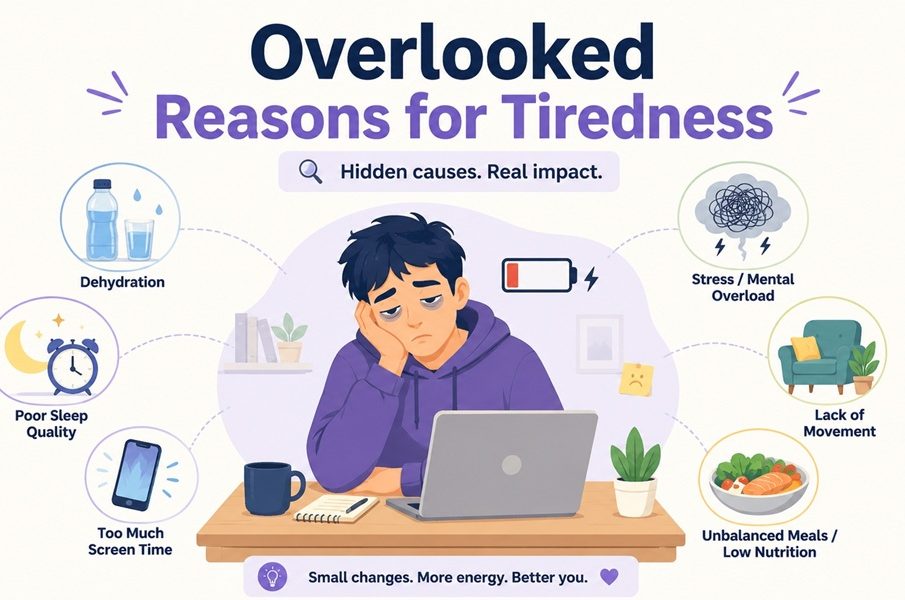
You can log eight hours and still wake up drained. When sleep isn’t the answer, tiredness is usually pointing at something else. Here are ten overlooked reasons, grouped so you can spot the most likely one for you.
Lifestyle and diet causes
- Too little protein. Many people eat enough calories but not enough protein, leaving energy unstable through the day. Spreading protein across meals helps.
- Blood-sugar swings. Refined carbs and sugary snacks spike then crash your blood sugar, producing that mid-afternoon wall. Pairing carbs with protein and fibre smooths the ride.
- Mild dehydration. Even a small fluid deficit reduces alertness and stamina before you ever feel thirsty.
- Too little movement. It sounds backwards, but a sedentary day worsens fatigue. Studies show short, gentle workouts a few times a week noticeably boost energy.
Nutritional deficiencies
- Iron-deficiency anaemia. One of the most common causes of excessive tiredness, especially in women. Less iron means less oxygen carried to your muscles and brain.
- Low vitamin B12 or vitamin D. Both are widespread and both cause fatigue, often alongside other quiet symptoms. A simple blood test can confirm them.
- Low potassium or magnesium. These minerals keep muscles and nerves working; shortfalls show up as weakness and tiredness.
Hidden medical causes
- An underactive thyroid. When the thyroid slows, every process slows with it, leaving you sluggish, cold and foggy.
- Sleep apnea, including the silent kind. Some people, particularly women, snore at a pitch too high to hear, so their broken sleep goes undiagnosed. The result is daytime exhaustion despite a “full night.”
- POTS, a circulation disorder. Postural orthostatic tachycardia syndrome is an often-missed nervous-system condition where standing up reduces blood flow to the brain, causing profound fatigue far beyond ordinary tiredness.
How to figure out your cause
Track when the tiredness hits and what surrounds it. Worse after meals points to blood sugar or food intolerance. Worse on standing suggests circulation or hydration. Constant, unrefreshing tiredness with other symptoms (cold intolerance, hair changes, breathlessness, low mood) is worth a blood panel covering iron, B12, vitamin D, thyroid and blood sugar.
| Clue | Possible cause | What to check |
| Crash mid-afternoon | Blood-sugar swings | Meal balance, refined carbs |
| Tired despite full sleep | Sleep apnea | Sleep study |
| Pale, breathless, dizzy | Iron deficiency | Ferritin, full blood count |
| Cold, foggy, weight gain | Underactive thyroid | TSH blood test |
| Exhausted on standing | POTS / dehydration | Heart-rate on standing |
Worse after meals points to blood sugar or a food intolerance. If you feel sleepy specifically after eating, your meals may be too carb-heavy, or a mild intolerance could be at play.
Simple steps that lift energy
While you investigate the cause, several changes reliably help most people feel less drained:
- Balance your plate: combine protein, fibre and healthy fats with carbs to avoid blood-sugar crashes.
- Move a little, often: a short daily walk fights fatigue better than resting more.
- Hydrate first: before reaching for caffeine, drink a glass of water; mild dehydration mimics tiredness.
- Protect your body clock: consistent sleep and wake times plus morning daylight make the sleep you get more restorative.
- Mind the caffeine timing: afternoon coffee can quietly erode the deep sleep that fuels tomorrow’s energy.
Frequently asked questions
Why am I tired even when I sleep 8 hours?
Because the cause often isn’t sleep at all. Hidden drivers like low iron, low vitamin B12 or D, an underactive thyroid, or unrefreshing sleep from undiagnosed apnea can leave you exhausted despite a full night. Blood-sugar swings and dehydration through the day add to it. If good sleep isn’t helping, look at these instead.
Can low iron cause tiredness without anaemia?
Yes. Iron stores can run low and sap your energy before a standard blood count shows anaemia. That’s why a ferritin test, which measures stored iron, often reveals a cause that a basic test misses, especially in women with heavy periods.
How long should tiredness last before I see a doctor?
Occasional tiredness is normal. But fatigue that lasts more than two to four weeks, comes on suddenly, or appears with other symptoms like breathlessness, weight changes or low mood deserves a check-up rather than more rest.
Does more sleep fix this kind of tiredness?
Not usually. If you’re already sleeping enough, the cause is likely elsewhere: a nutrient gap, blood-sugar swings, low activity, stress or an undiagnosed condition. Extra sleep won’t fix tiredness that isn’t coming from sleep loss, which is why these other reasons are worth checking.
See a doctor if fatigue lasts more than a couple of weeks, comes on suddenly, or arrives with chest pain, breathlessness or unexplained weight loss. Persistent tiredness is information, not a personal failing, and it usually has a findable, fixable cause.
Note: this article is for general information and isn’t a substitute for medical advice.